
FROM COTTON TO WOOL ... and Beyond
Alex Barr
It was the worst year of my youth, and who did I end up working for? That blustering mountebank Aeneas Kelly.* When we first met, I was a bus conductor. The job was meant to fill the summer vacation between second and third years at university, but now there was no third year. I had dropped out.
For a year I had endured a weird eye disorder with no physical cause, which made reading almost impossible. Because it was labelled ‘psychosomatic,’ I was having psychiatric treatment. This consisted of an hour a week lying drugged alone in a small room spouting rubbish, and taking mysterious red and blue pills. My fiancée was cooling on me and would soon break off our engagement—not that I blame her. The Garrick, an amateur theater in my hometown of Stockport in the North of England, said I had to spend a year working in the scene dock before I could audition for a part, so no relief there.
Aeneas did public relations for my father, who ran a laboratory researching felt for hats. I don’t know why a competent, self-sufficient scientist like Dad needed such a charlatan to promote his work. But by 1960, few men wore fedoras, so maybe he worried about his future. He certainly worried about mine, which was why he arranged the job with Aeneas. Trainee management consultant, office junior, gopher? My role was never defined.
I still see Aeneas enter the office, weary from some expedition. He looked like a cross between Nikita Khrushchev and Danny DeVito—round head, chunky body. He would put down his briefcase, stand hunched in his black wool overcoat, and sigh heavy exhalations which blew out his top lip. It was hard to tell what he was thinking, but it seemed life wasn’t treating him fairly.
There were four strands to his organization: management consultancy, light engineering, PR, and ‘research facilities,’ whatever they were. He had been ‘in cotton’ all his working life and now had an office in Manchester’s Royal Exchange, ten miles from my hometown. When that office oppressed me, I would hurry down to the vast empty floor where cotton was once traded, and study the display—like a giant scoreboard—of the last day’s figures. An elegant theater now occupies that floor, and playgoers can still see that relic of ‘Cottonopolis.’
Ah, Cottonopolis. Back then in 1960 the title was fading. In the city of dark satanic mills and gritty businessmen, replacing old machinery was uneconomical and labour was cheaper in the East. Maybe there was bad karma from the blockade-running days when Manchester needed slave-produced cotton from the Confederacy, even though the workers, despite being laid off, supported the Union.
But I cared for none of this. The red and blue pills made me bovine and apathetic. I dated a few girls but must have seemed halfhearted, so nothing gelled. I was still in love with my fiancée. The office number was one more than her house number, so I felt fate had thrust me away from her.
My work with Aeneas felt like a penance for failure. He sent me to a dismal trading estate, to a factory where pressure vessels were lined with lead. He had devised a Byzantine bonus system for the workers which he wanted me to understand. He also wanted me to learn the rudiments of estimating lead-lining, to the annoyance of the head estimator, who complained, “You’re training as a management consultant, Barr, not an estimator!”
But there was worse to come. In Aeneas’s company prospectus, with its glowing assurance of splendid service, was the sentence All our employees are graduates. So to save the phenomena, he said I had to finish my abandoned physics degree.
The red and blue pills left me no energy to resist. In a grim classroom at the College of Technology in Manchester’s sooty twin town of Salford, I experienced what T.S. Eliot calls “the rending pain of re-enactment.” I lasted a few weeks. The eye problem lingered. I still couldn’t leap the hurdles of quantum theory and vectors. And anyway, I realized the prospectus was false. It conjured up a bustling headquarters out in the Cheshire countryside packed with graduates, the Manchester office being but a branch, but whenever I phoned the alleged HQ to relay a message, the same voice answered: that of a middle-aged woman who sounded (was it my imagination?) less receptionist than housewife.
The red and blue pills made me sleepy and I was glad when Aeneas went out so I could doze in his inner sanctum. I sometimes woke with a start when he returned from an outing. (He reminded me of that when our relationship reached its dénouement.) On one expedition, he found a small machine for printing information on the ends of spools of cotton thread. He bought the patent and sent me to buy oil-filled bearings. A mildly spoken middle-aged engineer appeared, commissioned to take the machine and build more like it. Meanwhile Aeneas sent me to a printing-ink firm to ask whether we could print several spools from one charge. (Why?) I was told printing ink is designed to release in one go. I heard no more about the project.
He gave me a weird task I was too compliant to resist, which in these days of photocopiers, office printers, and word programs seems medieval. I had to type identical letters to mill owners, inviting them to buy a tension meter for warp threads on looms. A most inefficient process, and I was no great typist. After I produced dozens of letters he sent me to sell the machine. The idea was to place it against a warp thread, pull the trigger, and read the dial. A mill owner tried it, the thread broke, and he said mildly, “It’s no bloody use.” I had no answer. When I reported back, Aeneas just grunted. Another project I heard no more of.
He turned to cotton converting—buying raw woven cotton and finishing it. I thought I would see him bleach fabric to make lighter colors, starch it for body and shine, mercerize it with sodium hydroxide to strengthen the fibers, calender (industrial iron) it, and even print it with colorful patterns. A nattily dressed Egyptian appeared with his charming wife, and Aeneas took the couple to lunch. A few weeks later, a hefty roll of raw fabric four-and-a-half feet long was deposited in the inner sanctum. There it stayed the rest of my time there. The cloth was full of end-breaks, little knots where broken warp threads had been tied. Egypt, it seemed, had need of the tension meter.
There was also the novel. Aeneas told me, “In 1939 I had a play about to go on in the West End. The war killed it.” His latest oeuvre was handwritten in those familiar six-by-four exercise books with shiny red covers and avoirdupois weights on the back. Thanks to my limited typewriter skills he had employed a secretary, a modest young woman from the West of Ireland, and asked her to type it. If her Catholic sensibilities were disturbed by the hero “exploring the welts of Miss Jones’s stockings” as prelude to sex, she gave no sign. I sneaked a look. There was something familiar about it. The characters worked for an organization offering management consultancy, light engineering, PR, and research facilities.
I don’t know what became of the novel. The Irish secretary left and was replaced by a girl I dated—until she ditched me because I laughed at finding her hair full of hairpins. And because I squeezed her breast (this being the pre-pill purgatory of the early sixties). I never explored the welts of her stockings.
Cotton failed to satisfy so Aeneas turned to wool. In my pill-induced stupor I didn’t realize this transition would change my life, and that after drudgery as a pupa I could take wing. My boss had spotted an opportunity. One of his PR clients made shrink-resistant woolen garments. He decided to start a magazine promoting the entire wool industry, with backing from the Wool Industries Research Association, Bradford Dyers Association, makers of industrial dryers, and anyone else he could lure in, while sneaking his clients in under their skirts. The Wool Record and Textile World was the technical voice of the industry—this new magazine would be the trumpet (or puff) of hope.
He sent me across the Pennine Hills to sell advertising space to hard-headed Bradford wool men. I don’t think he expected results (and there were none), just wanted me to know it’s a tough world out there. Back in the office I practiced writing articles. One exercise was to explain the manufacture of terry cloth, another to describe the contents of a fashion brochure. I struggled with words that seemed uncontrollable and felt waves of panic in case my eyesight let me down, but at last felt the satisfaction of a piece coming together.
I learned to choose typefaces, lay out pages, edit text to fit them, create halftone and line blocks, use Ben Day dots, crop photographs, and deal with a printing firm. Something in me woke up despite the pills. I tried to imagine living in Bradford and decided the first thing I would do would be to join a drama group. I passed my driving test and borrowed Dad’s car to take girls I dated to dances at the Winter Gardens in Buxton. With one girl the relationship even lasted several months, and only fizzled when a letter from my ex unsettled me.
It came from Switzerland where she was a courier for a travel firm. She asked whether I remembered early mornings when we went jogging together. My reply saying I still loved her probably landed after she left the hotel. Would arriving in time have made it alter my destiny? I doubt it. Much later, in a letter saying she was about to marry, she wrote, “I had all the time I was in Switzerland to think about it.”
Aeneas’s wool magazine arrived from the printers looking good. Fate was on my side when I ran into an old pal from my days in the Scouts. (His nickname Elzy was short for Beelzebub, I have no idea why.) He showed me a book called How to Get a Better Job. I took its advice and applied to be an editorial assistant on a technical magazine in London.
Preparing for the interview I sat in the echoing rotunda of Manchester Central Library and studied a copy. The title was in a font called Chisel which has an air of reliability. Chisel is rarely seen today, but a local boatyard uses it and it brings back the excitement of those days.
I showed the wool magazine at the interview and got the job. When I returned Aeneas was furious.
“You’ve done nowt for me except fall asleep!”
“I’ve produced a good magazine for you.”
“Get out. Now!”
So I went.
I’m grateful to Aeneas for starting my career in journalism, which reached its zenith four years later when I was wire editor of The Wichita Beacon (after which I became an architect). And for memories: the din of a shed full of power looms, the twitching of the leather straps driving the shuttles, and the tang of hot oil, the scent of lanolin in a wool-combing shed in Bradford, and other sights, sounds, smells, and personalities of a vanishing textile empire.
I don’t know what happened to the wool magazine. I don’t know when Dad ended his PR contract, and it’s too late to ask. I discover that Aeneas died in North Wales in 1981. Calling him a blustering mountebank and charlatan is unfair—like him, I’ve had projects and plays come to nothing, I too scribble in notebooks and indulge in fantasies, and I often sigh blowing out my top lip.
When I moved to London I was given the lead in an amateur production of The Winter’s Tale. Quite a change from The Garrick. At the same drama group I met my future (and present) wife, who urged me off the pills. My ex faded into the past without regret. I remember that on the train to that interview in London I read Peyton Place, in which a character says moving to a different city makes you a different person.
It does.
*Not his real name, but with the same flavor.
This memoir records my transition from academic failure, a broken romance, and despair to a breakthrough into hope, a rewarding new career, and a new lasting love affair.
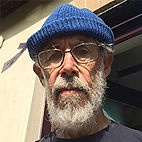
ALEX BARR's publications include two short fiction collections and three poetry collections, the most recent of which is Light and Dark (Kelsay Books, 2024). He is assembling a collection of nonfiction. alexbarr.co.uk